Crypto Wallet vs. Exchange: Where Should You Keep Your Crypto?
The difference between keeping crypto on an exchange and in your own wallet, what happened when exchanges failed, the protections that do and do not apply, and a practical setup for beginners and long-term holders.
Listen to this article
Key takeaways
- On an exchange, the company holds the private keys and owes you the crypto. In a self-custody wallet, you hold the keys and nobody else can move the coins.
- Crypto is not covered by FDIC insurance or SIPC protection. If an exchange fails, customers can wait years in bankruptcy, as FTX customers did after November 2022.
- Self-custody removes that counterparty risk but makes you responsible: lose the recovery phrase and the coins are gone.
- A common setup: a reputable regulated exchange for buying and selling, and a hardware wallet for long-term holdings.
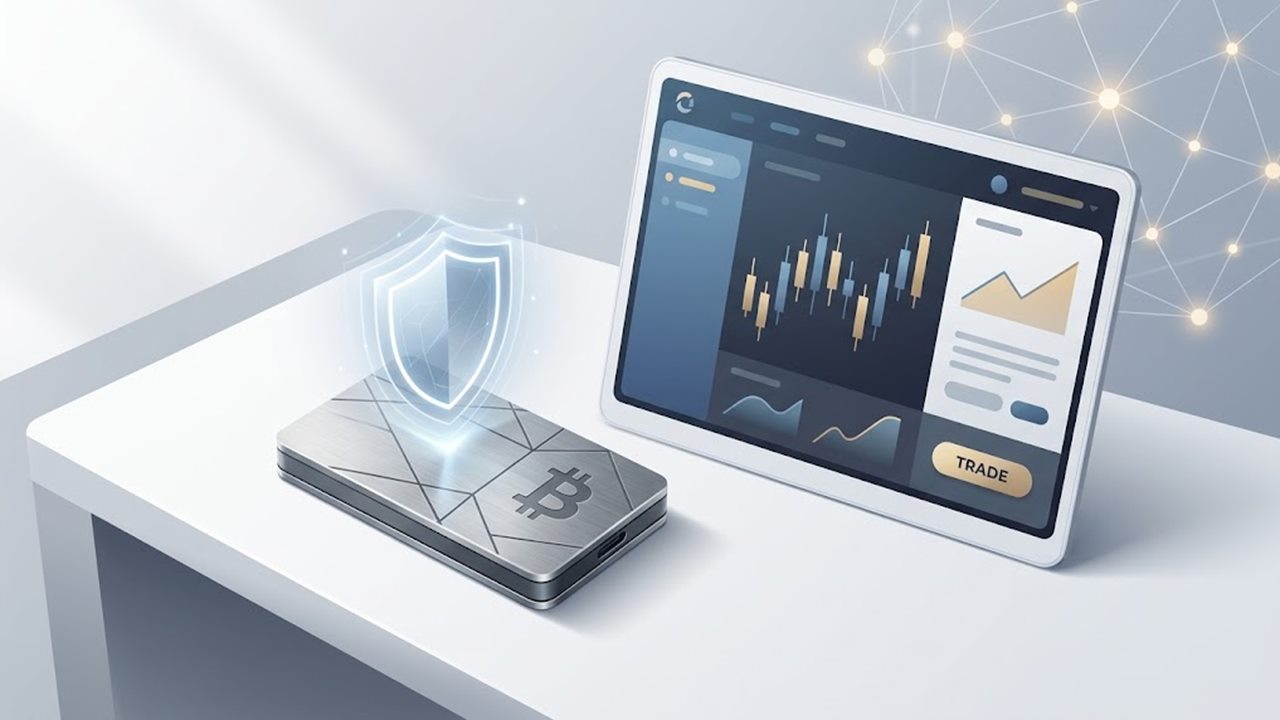
"Not your keys, not your coins" is one of crypto's oldest sayings, and the collapses of exchanges and lenders have made it painfully practical. Whether you keep crypto on an exchange or in your own wallet is a trade-off between convenience and control. Neither choice is risk-free; they simply move the risk to different places.
The key difference: who holds the private keys
Crypto is controlled by private keys, long secret numbers that authorize transactions. A wallet is software or a device that stores those keys. On an exchange, your balance is an entry in the company's records, and the company controls the keys to the actual coins. With self-custody, the keys are yours, usually backed up as a 12- or 24-word recovery phrase.
Exchange vs. self-custody wallet
| Exchange (custodial) | Self-custody wallet | |
|---|---|---|
| Who controls the coins | The exchange | You |
| Convenience | High: buy, sell and convert to dollars in one place | Lower: you send coins to an exchange to sell |
| Password or device lost | Account recovery through the company | Recovery phrase restores access; without it, coins are lost |
| Company failure or freeze | Funds can be frozen or tied up in bankruptcy | Not affected |
| Hacking risk | Exchange hacks and account takeovers | Malware, phishing and stolen recovery phrases |
| Insurance | No FDIC or SIPC coverage for crypto; some firms carry private insurance with limits | None |
What happens when an exchange fails
When FTX collapsed in November 2022, customers lost access to their accounts overnight, and their claims went through a bankruptcy process that took years. Crypto lenders such as Celsius and Voyager also froze withdrawals that year. Customer funds on an exchange are only as safe as the company's custody practices, its honesty and, in bankruptcy, the legal treatment of customer assets. SIPC states that it does not protect crypto assets, and FDIC deposit insurance covers only deposits at insured banks, not crypto held at an exchange, even if the exchange advertises a banking partner. The same applies to dollar stablecoins: they are not FDIC insured, even though they are designed to hold a value of $1.
Some exchanges are regulated as money transmitters or trust companies, publish proof of reserves or are part of publicly listed companies with audited financial statements. Those factors reduce, but do not remove, counterparty risk. If you buy crypto through a spot ETF in a brokerage account, the fund holds the coins with a custodian; see Bitcoin ETFs explained.
Types of self-custody wallets
- Hardware wallets: small devices that keep keys offline and sign transactions inside the device. The safest common choice for larger holdings.
- Mobile and desktop wallets: free apps that keep keys on your device. Convenient for small amounts, but exposed to malware and phone theft.
- Multisignature setups: require several keys to move funds, reducing single points of failure; more complex.
Our guide to the best Bitcoin wallets compares specific options.
Self-custody safety rules
- Buy hardware wallets only from the manufacturer or an authorized seller.
- Write the recovery phrase on paper or metal, never in a photo, cloud note or email.
- Store it securely, ideally in two locations, and consider how heirs could access it.
- Never enter the recovery phrase on a website or share it with anyone who claims to be "support."
- Send a small test transaction before moving a large amount, and double-check addresses.
A practical setup
| Situation | Reasonable approach |
|---|---|
| Small amounts, frequent trading | A regulated, reputable exchange with strong security settings (app-based two-factor authentication, withdrawal allowlists) |
| Long-term holdings | A hardware wallet, with the recovery phrase stored safely |
| Want exposure without managing keys | A spot crypto ETF in a brokerage account or IRA |
Many people buy on an exchange, as described in how to buy Bitcoin, then withdraw to their own wallet once the amount is large enough that losing it would hurt. Whatever you choose, keep crypto to a share of your wealth you could afford to lose; the reasons are in cryptocurrency risks explained.
Frequently asked questions
Is it safe to keep crypto on an exchange?
Safer at large, regulated exchanges with good security, but you still depend on the company. Crypto on an exchange is not protected by FDIC or SIPC.
Do I need a crypto wallet if I buy on an exchange?
Not to buy or hold, but moving long-term holdings to your own wallet removes the risk of the exchange freezing withdrawals or failing.
What happens if I lose my hardware wallet?
Nothing is lost as long as you have the recovery phrase: you can restore the wallet on a new device. If you lose both, the coins are unrecoverable.
Can a self-custody wallet be hacked?
The wallet itself rarely is; most losses come from phishing, fake apps and stolen recovery phrases. Hardware wallets reduce these risks.
Are crypto exchanges insured?
Some carry private insurance against specific events such as hacks of their hot wallets, with limits. That is not the same as FDIC or SIPC protection for customers.