When Should You Refinance Your Mortgage? The Break-Even Math
How to calculate whether a refinance pays off, why the monthly saving can hide a higher total cost, what refinancing costs and the situations where it makes sense even at 2026 rates.

Listen to this article
Key takeaways
- Break-even months = total refinance costs ÷ monthly savings. Refinance only if you expect to keep the loan longer than that.
- Closing costs commonly run about 2% to 6% of the loan amount.
- Restarting a 30-year term can lower the payment but add years of interest; compare total cost, not just the payment.
- With the 30-year average at 7.28% (October 1, 2026), refinancing mainly helps owners who borrowed at rates around 8% or higher, or who want to change loan type.
"Rates dropped half a point, should I refinance?" is the wrong question. The right one is whether the savings repay the cost of the new loan before you sell, refinance again or pay the loan off. That depends on three numbers you can calculate yourself.
Please note
Illustrative figures; Freddie Mac's 30-year fixed average was 7.28% on October 1, 2026. Lender pricing, points and closing costs vary. General information, not individual advice.
The break-even formula
Break-even (months) = Total refinance costs ÷ Monthly savings
Total costs include lender fees, points, appraisal, title insurance and government recording fees. Prepaid interest and new escrow deposits are not true costs, since you would pay them anyway, although they require cash at closing.
A worked example
You owe $300,000 at 8.0% with 28 years left, a principal and interest payment of $2,240. A lender offers 7.0% with closing costs of 3% ($9,000).
| Keep current loan | New 30-year loan | New loan, 28-year term | |
|---|---|---|---|
| Rate | 8.0% | 7.0% | 7.0% |
| Monthly payment | $2,240 | $1,996 | $2,039 |
| Monthly saving | – | $244 | $201 |
| Break-even | – | ≈ 37 months | ≈ 45 months |
| Remaining interest | $452,733 | $418,527 | $385,045 |
Both options pay off if you stay about four years. Notice the trade-off: the 30-year loan has the bigger monthly saving but adds two years of payments. Matching the remaining term saves about $67,700 of interest in total versus keeping the loan, nearly twice what the 30-year reset saves.
Good reasons to refinance
- A meaningfully lower rate with a break-even well inside your time horizon.
- Leaving an adjustable rate before it resets higher.
- Removing FHA mortgage insurance by switching to a conventional loan once you have about 20% equity.
- Shortening the term, for example from 30 to 15 years, if the higher payment fits your budget.
- Removing a co-borrower after a divorce or separation.
Cash-out refinancing
A cash-out refinance replaces your mortgage with a larger one and pays you the difference. Conventional and FHA cash-out loans are generally limited to 80% of the home's value. It makes sense mostly when your current rate is not far below today's rates; otherwise a HELOC or home equity loan keeps your low first-mortgage rate intact.
When refinancing does not pay
- You expect to move before the break-even point.
- The rate drop is small and the costs are high.
- You are many years into your loan and would restart the clock on mostly interest payments.
- Your goal is only a lower payment; a mortgage recast can achieve that without a new loan if you have a lump sum.
How to get the best refinance offer
- Check your credit and home value estimate; equity and score drive pricing.
- Request Loan Estimates from at least three lenders on the same day, including your current servicer.
- Compare section A (origination charges) and points, not just the rate.
- Decide on points only if you will keep the loan long enough for them to pay off.
- Lock the rate once you choose, and ask about float-down options.
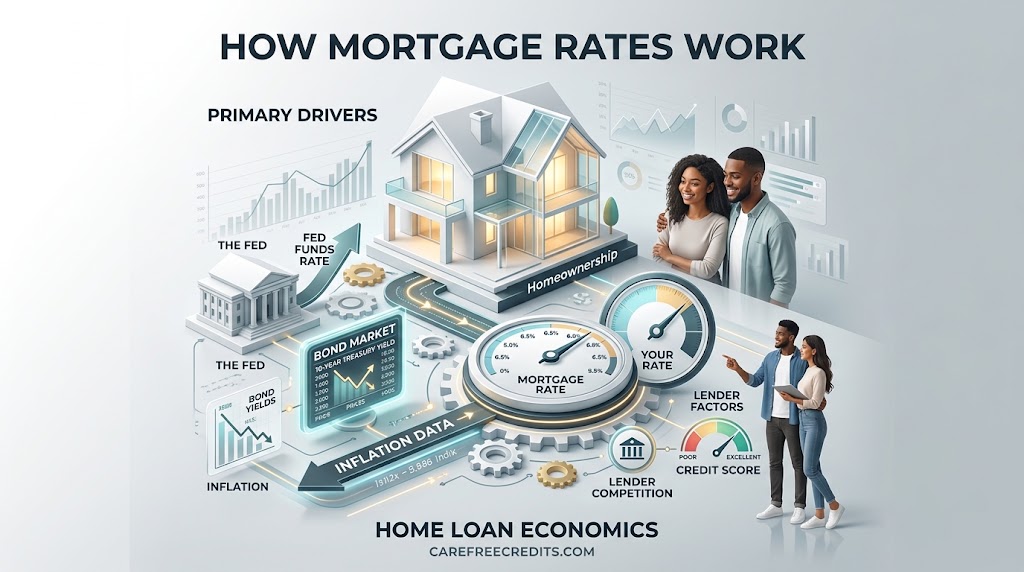
Background on pricing in how mortgage rates work.
Lenders often quote refinance rates with points; the break-even math is in are mortgage points worth it. If you hold an adjustable-rate loan, see ARM vs. fixed-rate mortgage before the rate resets.
Frequently asked questions
How much do rates need to drop to refinance?
There is no fixed threshold. A common rule of thumb is about one percentage point, but the break-even calculation with your actual costs is what decides.
Can I refinance with no closing costs?
Yes, in the sense that the lender covers costs in exchange for a higher rate, or adds them to the loan. You still pay them over time.
Does refinancing hurt my credit?
There is a small, temporary effect from the hard inquiry and the new account. Multiple mortgage inquiries within a short shopping window count as one for FICO scoring.
How soon can I refinance after buying?
Rate-and-term refinances are often possible right away with conventional loans; some programs and cash-out loans have waiting periods, commonly six to twelve months.
Should I refinance to a 15-year mortgage?
It saves a lot of interest and usually comes with a lower rate, but the payment is much higher. It suits borrowers with stable income who prioritize paying off the home.