Fixed-Term Deposits
CD Ladder Strategy: How to Build a CD Ladder
A CD ladder splits your savings across CDs that mature at different times, so part of the money is always close to being available while the rest earns longer-term rates.
A CD ladder splits your savings across CDs that mature at different times, so part of the money is always close to being available while the rest earns longer-term rates.
At 4% APY, $10,000 earns about $400 in a year and $33 a month; at the 0.37% national average, about $37 a year. See the math for other balances, CDs and taxes.
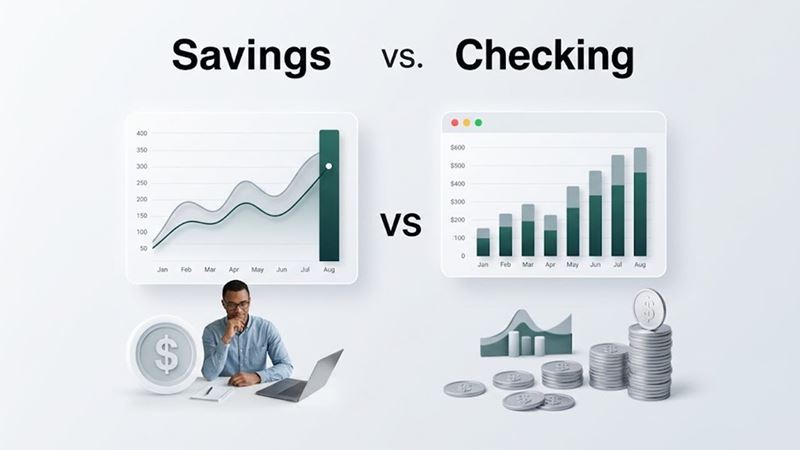
A checking account is for spending and a savings account is for keeping money you do not need yet. Here is how they differ in interest, access and fees, and how much to keep in each.
Estimate the 2026 federal tax on a capital gain, see how long-term and short-term gains are taxed, how the 0%, 15% and 20% brackets stack on your income and how losses offset gains.
Estimate your 2026 take-home pay after federal income tax, Social Security and Medicare, see which deductions lower your taxes and learn why your actual withholding may differ.
Calculate what a CD earns by maturity, convert an interest rate into APY, estimate the early withdrawal penalty and compare competitive CD rates with the national average.
See when your credit card will be paid off and how much interest you will pay, or the monthly payment you need to be debt-free by a target date, compared with minimum payments.
Calculate how much interest your savings account will earn with monthly deposits, compare a high-yield APY with the national average and work out how much to save each month for a goal.
See how savings and investments grow with compound interest, how much comes from your own contributions and how much from interest on interest, with worked examples and the formula.
Find out how much interest and time you save with extra mortgage payments, how a lump sum compares with monthly extras and when paying off the loan early does not make sense.
Estimate your monthly mortgage payment with taxes, insurance and PMI, see the total interest over the loan and learn how the rate, term and down payment change what you pay.
A child's savings can sit in a joint account with a parent or in a custodial UTMA/UGMA account that legally belongs to the child. The choice affects control, taxes and financial aid. Here is how they compare.