Credit Card vs. Debit Card: Which Should You Use?
How credit and debit cards differ in fraud protection, credit building, rewards, fees and holds, and a practical guide to which card to use for everyday spending, travel, online shopping and big purchases.
Listen to this article
Key takeaways
- A debit card takes money straight from your checking account. A credit card borrows from the issuer, and you repay later.
- Federal law caps your liability for unauthorized credit card charges at $50; for debit cards it can reach $500 or more if you report late, and the money is gone from your account while it is disputed.
- Only credit cards build credit history. Debit card use is not reported to the credit bureaus.
- Credit cards are cheaper only if you pay the statement balance in full; otherwise interest erases any rewards.
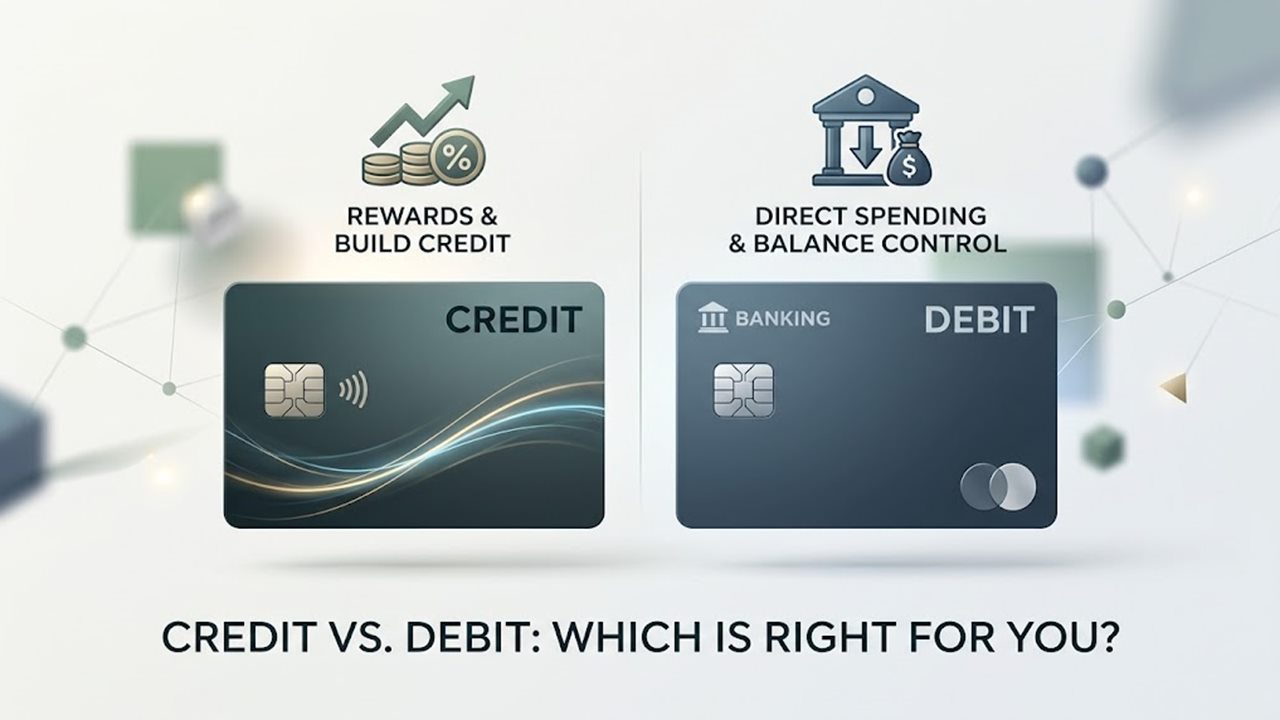
Credit and debit cards look the same at the register, but what happens behind them is very different. A debit card moves your own money; a credit card creates a short-term loan. That difference affects your protection against fraud, your credit score, your costs and how easy it is to overspend. Most people benefit from having both and using each where it is strongest.
Credit card vs. debit card at a glance
| Credit card | Debit card | |
|---|---|---|
| Money used | The issuer's, repaid later | Yours, from checking |
| Builds credit history | Yes | No |
| Legal fraud liability cap | $50 (most networks offer $0) | $50 if reported within 2 business days, up to $500 within 60 days, potentially unlimited after that |
| Interest | None if paid in full; 22.15% average for accounts charged interest (Q2 2026) | None |
| Rewards | Common: 1% to 5% cash back or points | Rare |
| Overdraft risk | No; purchases above the limit are usually declined | Yes, unless you opt out of overdraft coverage for card purchases |
| Disputes | Billing error and dispute rights under the Fair Credit Billing Act | Error resolution under the Electronic Fund Transfer Act; money may be held while investigated |
Fraud protection: the biggest practical difference
With a credit card, unauthorized charges are the issuer's money until the dispute is resolved, and federal law limits your liability to $50; Visa, Mastercard, American Express and Discover go further with zero-liability policies for most cardholders. With a debit card, the money leaves your checking account immediately. Federal Regulation E limits your loss to $50 if you report a lost or stolen card within two business days, up to $500 if you report within 60 days, and potentially more after that. Banks must investigate, but you can be short of cash for rent and bills while they do. For online shopping and unfamiliar merchants, a credit card is the safer choice.
Building credit
Card issuers report your balance and payment history to the credit bureaus each month; debit card activity is never reported. Using a credit card for a few regular bills and paying the statement balance in full is one of the simplest ways to build a credit score. If you are starting out, see best credit cards for beginners; keep balances low relative to the limit, as explained in credit card utilization.
Costs and fees
- Interest: a credit card is free only if you pay the statement balance in full by the due date. Carry a balance and interest quickly outweighs rewards; statement vs. current balance explains what to pay.
- Overdraft fees: a debit purchase can overdraw your account and trigger a fee unless you opted out of overdraft coverage for card transactions.
- Cash advances: taking cash with a credit card costs a fee and interest from day one. Use a debit card at your own bank's ATMs for cash.
- Foreign transaction fees: many cards charge about 3% abroad, but many travel and no-annual-fee cards charge none; see how exchange rates work.
Holds on hotels, rental cars and gas
Hotels, car rental companies and gas pumps often place a temporary authorization hold above the final amount. On a credit card, the hold reduces available credit; on a debit card, it ties up real money in your checking account for days, which can cause other payments to bounce. Use a credit card for these.
When to use which
| Situation | Better choice |
|---|---|
| Online shopping and subscriptions | Credit card, for fraud and dispute protection |
| Travel, hotels, rental cars | Credit card, for holds, protections and no foreign fees on the right card |
| Everyday spending if you pay in full | Credit card, for rewards and credit building |
| Everyday spending if you tend to carry a balance | Debit card, to avoid interest and overspending |
| ATM cash | Debit card at an in-network ATM |
| Large purchases you cannot pay off quickly | Neither by default; compare a 0% APR card or a personal loan |
For the debit side, choosing a checking account with no monthly fee, a large ATM network and no or low overdraft fees matters most; see how to choose a checking account.
Frequently asked questions
Is it better to use a credit card or a debit card?
If you pay in full every month, a credit card is usually better: stronger fraud protection, rewards and credit building. If you are likely to carry a balance, a debit card avoids interest.
Does using a debit card build credit?
No. Debit card activity is not reported to the credit bureaus.
Is a debit card safer than a credit card?
For fraud, a credit card is safer because stolen charges do not drain your own money and federal liability limits are lower.
Can I use a credit card like a debit card?
You can treat it that way by only spending what you have in checking and paying the statement balance in full each month. That gives you the protections without the interest.
What is a secured credit card?
A credit card backed by a cash deposit that sets your limit. It works and reports like a regular credit card, which makes it a common first step for building or rebuilding credit.