SCRA and Military Lending Act: The 6% and 36% Interest Caps for Service Members
How the Servicemembers Civil Relief Act cuts interest on debts taken before active duty, how the Military Lending Act caps the cost of new credit, who is covered and how to request the benefits.
Listen to this article
Key takeaways
- SCRA: interest on debts incurred before active duty is capped at 6% a year while you serve, and for one year after service for mortgages. Interest above 6% is forgiven, not deferred.
- MLA: most consumer credit taken out during active duty is capped at a 36% Military Annual Percentage Rate, which includes most fees and add-on products.
- SCRA relief must be requested in writing with a copy of your orders, up to 180 days after service ends.
- The MLA covers active-duty members and their dependents; the SCRA also covers activated Guard and Reserve members.
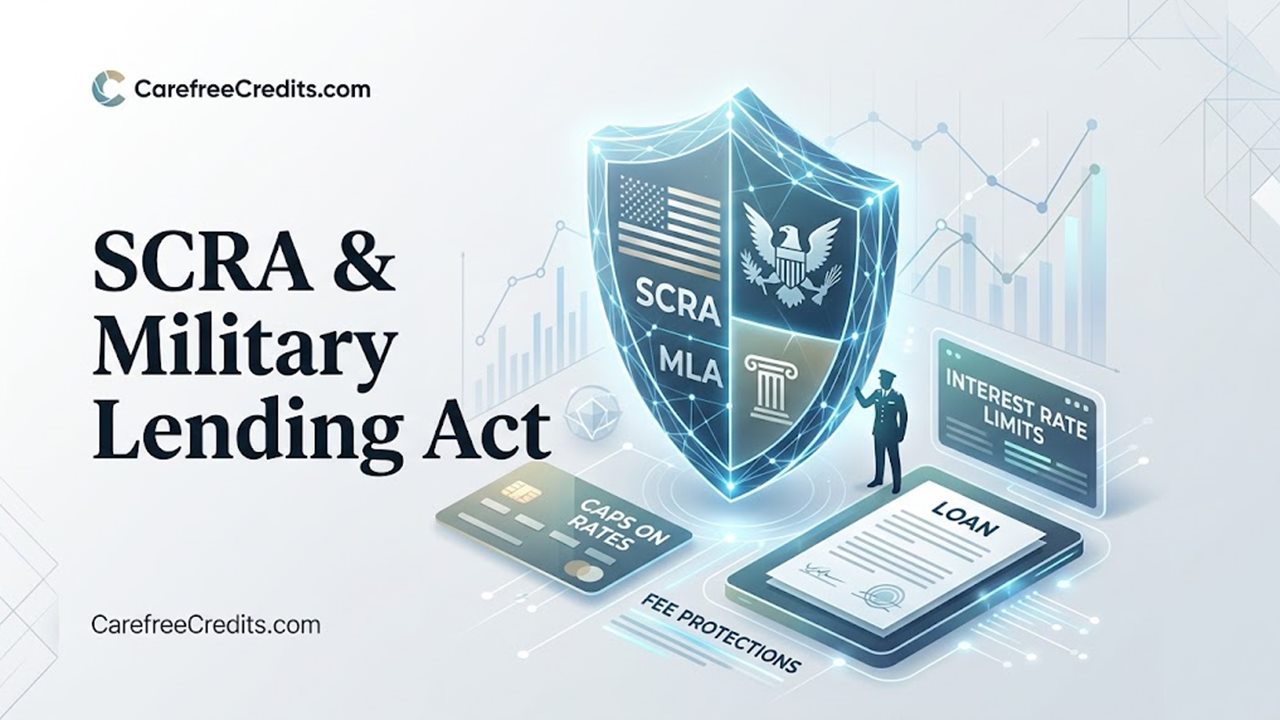
Two federal laws protect military borrowers, and they are often confused. The Servicemembers Civil Relief Act lowers the cost of debts you already had when you entered service. The Military Lending Act limits what lenders may charge you for new credit while you serve. Used together, they can save a household thousands of dollars.
Please note
General information as of October 2026, not legal advice. Your installation's legal assistance office provides free help with SCRA and MLA questions, and creditors' obligations are enforced by federal regulators and the Department of Justice.
SCRA vs. MLA at a glance
| SCRA interest cap | Military Lending Act | |
|---|---|---|
| Which debts | Obligations incurred before active duty | Consumer credit taken out during active duty |
| Rate limit | 6% per year, including most fees | 36% Military Annual Percentage Rate (MAPR) |
| Who is covered | Service members on active duty, including Guard and Reserve on qualifying orders; joint debts with a spouse | Active-duty members (including Guard and Reserve on active duty for more than 30 days) and their dependents |
| Duration | Period of military service; plus one year for mortgages | While the borrower is a covered borrower |
| Action needed | Written request plus orders | Automatic; lenders must comply |
| Main exclusions | Debts incurred during service | Residential mortgages; loans to buy a vehicle or personal property secured by that purchase |
The SCRA 6% interest cap in detail
Under 50 U.S.C. § 3937, a creditor may not charge more than 6% interest per year on an obligation incurred by a service member, or by a service member and spouse jointly, before entering military service. "Interest" includes service charges, renewal charges and most fees, so a lender cannot recover the difference through fees. Any interest above 6% is forgiven for the protected period, and the monthly payment must be reduced accordingly.
Eligible debts include credit cards, auto loans, personal loans, mortgages, home equity loans and lines of credit, many student loans and even certain business loans with personal liability. For a mortgage, the cap lasts for the period of service plus one year.
Example
A reservist with a $20,000 auto loan at 9% is called to active duty for a year. Interest at 9% would be about $1,800 for that year; at the SCRA cap of 6% it is about $1,200. The $600 difference is forgiven, not added to the balance.
How to request SCRA relief
- Send each creditor a written request with a copy of your military orders or a letter from your commanding officer.
- Do it any time during service and no later than 180 days after your service ends; the reduction applies retroactively to the date you entered active duty.
- Keep copies and confirm the new rate on your next statement.
Many lenders can also verify active duty status through the Defense Manpower Data Center's SCRA website, but a written request is what triggers your rights.
The Military Lending Act in detail
The MLA (10 U.S.C. § 987 and the Department of Defense rule at 32 CFR part 232) limits the cost of most consumer credit extended to covered borrowers. The Military Annual Percentage Rate includes interest plus most fees, credit insurance premiums, debt cancellation fees and charges for add-on products sold with the credit. It may not exceed 36%.
The MLA applies to payday loans, vehicle title loans, installment loans, credit cards, overdraft lines and similar products. It does not apply to residential mortgages or to loans used to buy a car or other personal property that are secured by that property.
Other MLA protections
- No mandatory arbitration clauses.
- No prepayment penalties.
- No requirement to waive SCRA or other legal rights.
- Lenders may not require a military allotment as a condition of the loan.
- Restrictions on rolling over or refinancing certain loans, such as payday-type credit, with the proceeds of new credit from the same creditor.
Other borrowing options for service members
- Military relief societies (Army Emergency Relief, Navy-Marine Corps Relief Society, Air Force Aid Society, Coast Guard Mutual Assistance) offer interest-free loans and grants for emergencies.
- Credit unions serving military members often provide small-dollar loans; federal credit unions are capped at 18% on most loans and offer payday alternative loans at no more than 28%.
Frequently asked questions
Does the SCRA lower student loan interest?
Yes, for loans taken out before active duty, including federal and many private student loans. The Department of Education can apply the cap automatically for eligible federal loans.
Can I use the SCRA cap on a credit card I opened while on active duty?
No. The SCRA cap applies to debts incurred before service. New credit during service is protected by the Military Lending Act instead.
Does the MLA apply to my spouse?
Yes. Dependents of active-duty members, as defined in the rule, are covered borrowers.
Is my car loan covered by the MLA?
Not if the loan was used to buy the car and is secured by it. A vehicle title loan, where you borrow against a car you already own, is covered.
Where can I get help if a lender refuses?
Contact your installation's legal assistance office. You can also submit a complaint to the CFPB, which has a dedicated Office of Servicemember Affairs.