Second-Chance Bank Accounts Explained
Why banks deny checking accounts, how ChexSystems and Early Warning Services reports work, what second-chance and Bank On certified accounts offer, what they cost and how to get back to a regular account.

Listen to this article
Key takeaways
- Banks screen new customers with consumer reports from ChexSystems and Early Warning Services; unpaid overdrafts and accounts closed for cause can lead to a denial.
- Negative information generally stays on these reports for five years.
- A second-chance account is a checking account for people with a negative banking history, usually with some limits or a monthly fee.
- Bank On certified accounts meet national standards for low cost and no overdraft fees, and only deny new customers for past fraud.
Being turned down for a checking account is more common than many people think, and it has nothing to do with your credit score. Banks look at your banking history: bounced payments, unpaid overdrafts and accounts closed with a negative balance. Without a checking account, cashing checks, paying bills and receiving direct deposit all get more expensive. Second-chance accounts exist to bridge that gap.
Why banks deny checking accounts
- An account closed by a bank with a negative balance you never repaid.
- Repeated overdrafts or returned payments.
- Suspected fraud or identity problems.
- Too many account applications in a short time.
Banks learn about this from specialty consumer reporting agencies, mainly ChexSystems and Early Warning Services. These reports are separate from your credit reports. Generally, negative information remains on them for five years.
Check your banking reports first
You have the right to a free copy of your ChexSystems and Early Warning Services reports every 12 months, and after any denial based on them. Review them for errors, such as debts you repaid or accounts that are not yours, and dispute mistakes directly with the reporting company; it must investigate. If you owe a former bank money, paying it and asking the bank to update the report can make the record far less damaging to future applications.
What a second-chance account is
A second-chance checking account is offered by banks and credit unions that either do not use these reports for that account or accept applicants with a negative history. Typical features:
| Feature | What to expect |
|---|---|
| Monthly fee | Often a few dollars to around $15, sometimes waived with direct deposit |
| Overdrafts | Often not allowed, which avoids overdraft fees |
| Checks | Sometimes limited or not offered at first |
| Daily limits | Lower limits on debit card purchases, ATM withdrawals or mobile deposits |
| Upgrade path | Many convert to a standard account after 6 to 12 months of good use |
Bank On certified accounts
The Bank On National Account Standards, set by the Cities for Financial Empowerment Fund, describe low-cost accounts with no overdraft fees, a debit card, online bill pay and low or no monthly fees. Certified accounts do not deny people for past banking problems other than actual fraud. Many large banks and credit unions offer one; the Bank On website lists certified accounts. For someone rebuilding banking history, a Bank On account is often the best starting point because it removes overdraft fees entirely.
Other options
- Credit unions, which sometimes take a more personal look at applicants; see bank vs. credit union.
- Online banks and fintech accounts that do not use ChexSystems for some products. Check that deposits are held at an FDIC-insured bank.
- Prepaid cards with direct deposit, which avoid overdrafts but often carry more fees and fewer protections than bank accounts.
Fees and fine print to compare
- Monthly maintenance fee and how to waive it.
- Opening deposit and minimum balance.
- Whether overdrafts are possible and what they cost.
- ATM network size and out-of-network fees.
- When and how the account can upgrade to a regular checking account.
- FDIC or NCUA insurance.
The broader checklist for any account is in how to choose a checking account.
Using the account to rebuild your record
- Set up direct deposit and low-balance alerts.
- Opt out of overdraft coverage for debit card purchases if the account offers it.
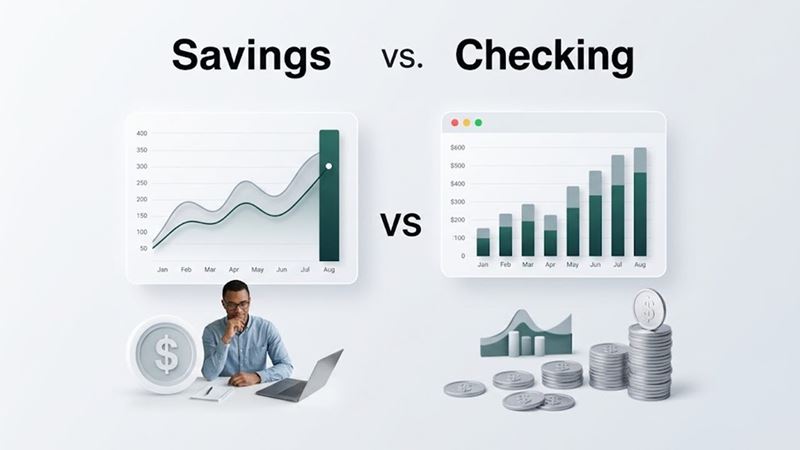
- Keep a small buffer, and move savings to a separate account; see savings vs. checking.
- Ask the bank after 6 to 12 months whether you qualify for a standard account.
Frequently asked questions
How long does ChexSystems keep records?
Negative information generally stays for five years. Paying off what you owe does not erase it, but an updated record showing it was paid looks much better to banks.
Do second-chance accounts check credit?
They usually do not deny you based on your credit score. Some still review banking history, but accept applicants that standard accounts would decline.
Can I get a bank account with a negative ChexSystems report?
Yes. Second-chance accounts, Bank On certified accounts and some credit unions and online banks accept applicants with negative banking history.
Are second-chance accounts FDIC insured?
Yes, if the bank is FDIC insured or the credit union is NCUA insured. Coverage is the same as for any deposit account.
Will a second-chance account help my credit score?
No. Bank account activity is not reported to the credit bureaus. It rebuilds your banking history, which is what future banks check.