CD vs. High-Yield Savings Account: Which Is Better?
A CD locks in a rate for a fixed term; a high-yield savings account keeps your money available at a variable rate. Here is how to decide, with examples for falling and rising rates.


A CD ladder splits your savings across CDs that mature at different times, so part of the money is always close to being available while the rest earns longer-term rates.
At 4% APY, $10,000 earns about $400 in a year and $33 a month; at the 0.37% national average, about $37 a year. See the math for other balances, CDs and taxes.
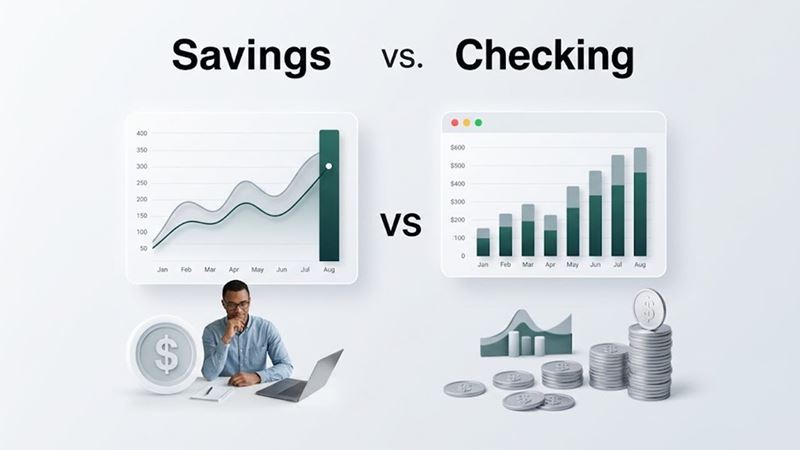
A checking account is for spending and a savings account is for keeping money you do not need yet. Here is how they differ in interest, access and fees, and how much to keep in each.
Calculate how much interest your savings account will earn with monthly deposits, compare a high-yield APY with the national average and work out how much to save each month for a goal.
A child's savings can sit in a joint account with a parent or in a custodial UTMA/UGMA account that legally belongs to the child. The choice affects control, taxes and financial aid. Here is how they compare.
Self-employed people pay taxes four times a year, so the money should sit somewhere safe, liquid and separate. A high-yield savings account fits most; Treasury bills can add state tax savings. Here is a simple system.
Banks must turn over accounts with no owner activity, typically after three to five years, to the state. The money is not lost: states hold it with no deadline to claim. Here is how to search for free and prevent it.
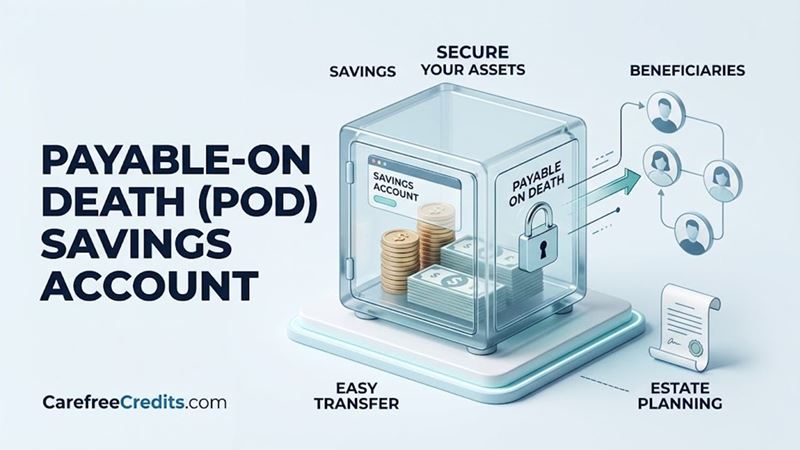
Naming a payable-on-death beneficiary lets your savings pass directly to the people you choose, without probate. It can also raise FDIC coverage to $1.25 million per owner. Here is how it works and what to watch.
The Federal Reserve removed the federal six-per-month limit on savings withdrawals in April 2020. Banks may still keep their own limits and fees, so check your account agreement. Here is what still applies.
Yes: savings interest is taxed as ordinary income in the year it is credited, whether or not you get a 1099-INT. Here is how much tax to expect, what Treasury interest saves on state taxes and how kids' interest is taxed.
FDIC insurance covers $250,000 per depositor, per bank, per ownership category. Using joint accounts, beneficiaries and retirement accounts, a couple can insure several million dollars at a single bank.