Payable-on-Death Beneficiaries on Savings Accounts: Probate, FDIC Coverage and Pitfalls
How a payable-on-death designation passes a bank account outside probate, how the FDIC insures POD accounts since 2024, how it interacts with a will and joint ownership, and mistakes to avoid.
Listen to this article
Key takeaways
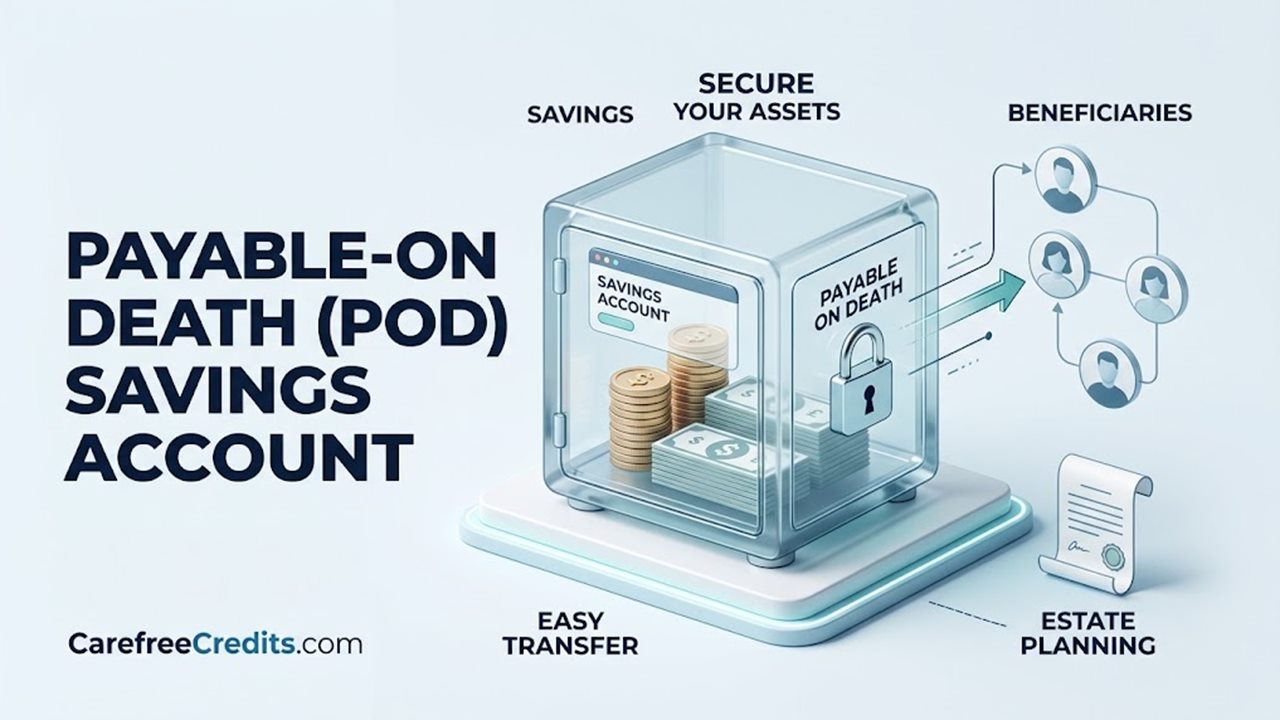
- A payable-on-death (POD) designation, also called a Totten trust or informal revocable trust, names who receives the account when you die.
- The money passes directly to the beneficiaries, generally without probate, and the designation overrides your will for that account.
- You keep full control while alive; beneficiaries have no rights until your death.
- FDIC coverage for POD accounts is $250,000 per beneficiary, up to five, so up to $1.25 million per owner per bank.
Adding a beneficiary to a savings account takes a few minutes and costs nothing, yet many accounts have none. Without one, the balance usually becomes part of your estate, which can mean probate, delays and court costs before your family can use the money. A POD designation avoids that for the account it covers.
Please note
General information as of October 2026, not legal advice. Estate and banking rules vary by state; for larger estates or blended families, an estate planning attorney can coordinate beneficiaries with your will and trusts.
How a POD account works
- You fill out the bank's beneficiary form for a checking, savings, money market account or CD.
- You remain the owner: you can spend the money, change beneficiaries or remove them at any time without their consent.
- After your death, each beneficiary presents a certified death certificate and identification to the bank and receives their share.
If a beneficiary dies before you, their share generally does not pass to their heirs unless the bank's form and state law provide for it. Review designations after marriages, divorces, births and deaths.
POD vs. joint account vs. will
| POD beneficiary | Joint owner | Through a will | |
|---|---|---|---|
| Access during your life | None | Full, immediately | None |
| Exposure to the other person's creditors | No, while you live | Yes | No |
| Transfer at death | Directly, usually within days or weeks | Automatically to the surviving owner | Through probate |
| Can you change it alone? | Yes | No, removing an owner usually needs their consent | Yes |
A joint account makes sense with a spouse who shares finances. Adding an adult child as joint owner only for convenience can expose the account to their creditors and may unintentionally disinherit siblings. A POD designation, sometimes combined with a power of attorney for financial matters, often fits that goal better.
FDIC coverage since April 2024
The FDIC treats POD accounts as trust accounts. Under rules effective April 1, 2024, each owner is insured up to $250,000 for each eligible beneficiary, up to five beneficiaries, for a maximum of $1.25 million per owner per bank. This coverage is separate from your single and joint accounts. Example: a POD account naming three children is insured up to $750,000. More combinations in FDIC insurance limits.
Common mistakes
- Outdated beneficiaries after a divorce or a death in the family.
- Unequal outcomes: naming one child on one account and another child on a different account can split money unevenly as balances change.
- Minor beneficiaries: banks cannot simply hand money to a child; a court-appointed guardian or a custodian under your state's Uniform Transfers to Minors Act may be needed. Some forms let you name a custodian.
- Conflicts with your plan: the POD designation controls even if your will says something else.
- Forgotten accounts: beneficiaries cannot claim what they do not know about; keep a list of accounts with your estate documents. Unclaimed balances can end up with the state; see dormant accounts and unclaimed money.
What heirs need to claim a POD account
- A certified copy of the death certificate.
- Government-issued photo ID.
- The bank's claim form; some banks also ask for the beneficiary's taxpayer ID for interest reporting.
Interest earned after the owner's death is reported to the beneficiary. The account balance itself is generally not income to the beneficiary, although it may count toward the estate for estate tax purposes if the estate is large.
Frequently asked questions
Does a payable-on-death account avoid probate?
Generally yes. The bank pays the named beneficiaries directly, so that account does not pass through the probate estate.
Can a POD beneficiary withdraw money before my death?
No. The beneficiary has no access or ownership rights while you are alive.
Does a will override a POD designation?
No. The beneficiary designation on the account controls that account.
Can I name more than one beneficiary?
Yes. Most banks allow several beneficiaries with equal or specified shares. FDIC coverage counts up to five beneficiaries per owner.
Can I name a charity as POD beneficiary?
Usually yes, and charities count as eligible beneficiaries for FDIC trust coverage.