How Much Should You Keep in an Emergency Fund?
How to size an emergency fund from your essential expenses, when three months is enough and when you need more, where to keep it, how to build it from zero and when to use it.
Listen to this article
Key takeaways
- A common target is three to six months of essential expenses, not of total income.
- Hold more, often six to twelve months, if your income is irregular, you are self-employed, a single earner or in a volatile industry.
- In the Federal Reserve's latest survey, 63% of adults said they would cover an unexpected $400 expense with cash or its equivalent.
- Keep the fund in an insured, liquid account, such as a high-yield savings account, separate from everyday checking.
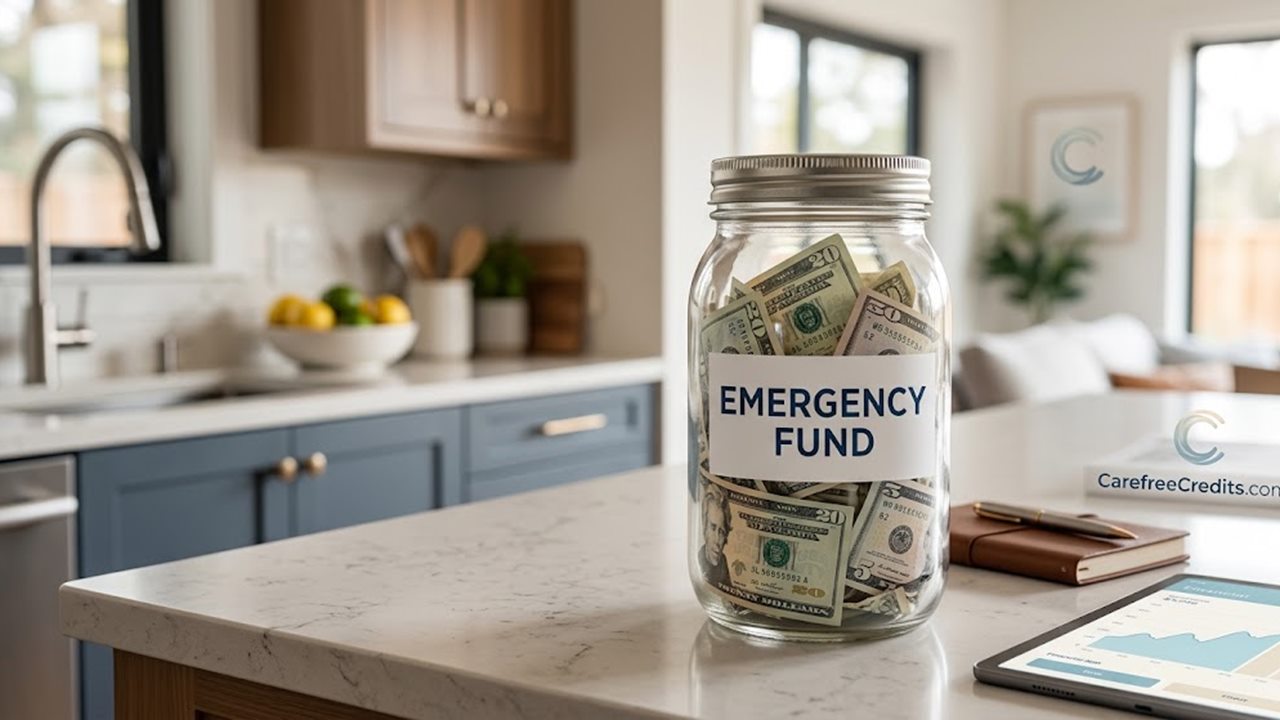
An emergency fund is not an investment; it is insurance you pay yourself. Its job is to turn a job loss, a medical bill or a broken transmission into an inconvenience instead of high-interest debt. The size that does that job differs from household to household, and it can be calculated rather than guessed.
Please note
General guidance, not individual financial advice. If you carry high-interest debt, a small starter fund followed by aggressive debt payoff is often the better sequence.
Step 1: Calculate your essential monthly expenses
Add up what you must pay even in a crisis:
- Rent or mortgage, property taxes, insurance
- Utilities, phone and internet
- Groceries and basic household costs
- Transportation, including car payments and insurance
- Minimum debt payments
- Health insurance premiums and regular medical costs
- Childcare and other non-negotiable obligations
Leave out restaurants, travel, subscriptions you would cancel and retirement contributions you could pause temporarily.
Step 2: Choose your number of months
| Your situation | Suggested cushion |
|---|---|
| Two stable incomes, good job security | 3 months |
| Single income or dependents | 4 to 6 months |
| Self-employed, commission-based or gig income | 6 to 12 months |
| Homeowner with an older house or car | Add a repair buffer |
| Near retirement or with health issues | 6 months or more |
Example
Essential expenses of $3,500 a month mean a fund of $10,500 for three months and $21,000 for six. A freelancer with the same costs who wants nine months would aim for $31,500.
How common emergency savings are
The Federal Reserve's report on the economic well-being of U.S. households in 2025, published in May 2026, found that 63% of adults would pay for an unexpected $400 expense using cash or its equivalent, unchanged from the year before. The rest would borrow, sell something or could not cover it at all. Even a modest fund puts you ahead of many households.
Where to keep an emergency fund
| Option | Access | Rate | Notes |
|---|---|---|---|
| High-yield savings account | 1 to 2 business days | Variable, competitive | FDIC/NCUA insured; the usual first choice |
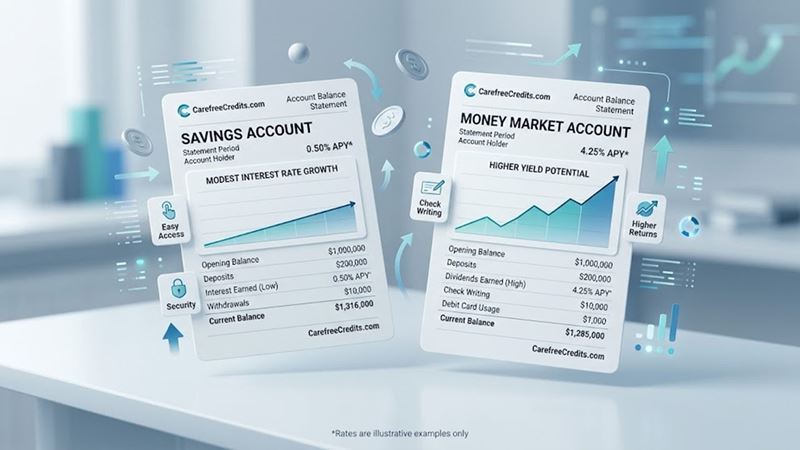
| Money market account | Same, often with checks or debit card | Variable | Insured; may need a higher balance |
| Money market fund | Usually next business day | Close to Treasury bill yields | Not FDIC insured; for a second tier |
| Short CDs or a CD ladder | At maturity, or with a penalty | Fixed | Good for the part you are unlikely to need soon |
| Checking account | Immediate | Usually near 0% | Too easy to spend; keep only a buffer here |
Options are compared in high-yield savings accounts and money market account vs. savings account. Avoid stocks or crypto for this money: they can fall exactly when you need cash.
How to build it from zero
- Start with a starter goal of $1,000 or one month of expenses.
- Automate a transfer on payday into a separate account at a different bank, so it is out of sight.
- Direct windfalls there: tax refunds, bonuses, gifts.
- Cut one recurring cost and send the saving to the fund.
- Increase the transfer each time your income rises.
If you have card debt at 20% or more, consider building a starter fund first, then paying the cards down before completing the full fund.
What counts as an emergency
- Yes: job loss, urgent medical or dental care, essential car or home repairs, emergency travel for family.
- No: planned purchases, vacations, sales and holiday gifts; those belong in separate savings goals.
After using the fund, rebuild it before resuming other goals.
A simple way to fund it every month is the 50/30/20 budget rule, and how much savings you should have by age puts your total savings in context.
Frequently asked questions
Is $10,000 a good emergency fund?
It is a solid fund if your essential expenses are around $2,500 to $3,300 a month, covering three to four months. Higher costs or irregular income call for more.
Should I invest my emergency fund?
No. Keep it in insured, liquid accounts. Investments can lose value when you need to sell.
Should I pay off debt or build an emergency fund first?
Many planners suggest a small starter fund first, then paying off high-interest debt, then completing the full fund.
Is interest on my emergency fund taxable?
Yes, savings interest is taxed as ordinary income; see is savings account interest taxable?
Do self-employed people need a bigger emergency fund?
Usually yes, and separately from money set aside for taxes; see where to keep tax savings.