High-Yield Savings Accounts: How They Work, What They Pay and How to Choose
Why some savings accounts pay ten times the national average, where rates stand after the Fed's September 2026 hike, how safe online banks and fintech apps are and a checklist for choosing an account.

Listen to this article
Key takeaways
- The FDIC's national average savings rate was 0.37% in September 2026; many online high-yield accounts paid around 4% or more in early October 2026.
- On $10,000, that is the difference between about $37 and $420 of interest a year.
- Rates are variable and follow the Federal Reserve, which raised its target range to 3.75% to 4.00% on September 16, 2026.
- Make sure the money sits at an FDIC- or NCUA-insured institution; fintech apps are not banks themselves.
A high-yield savings account is not a special product category in law. It is simply a savings account that pays much more than the typical bank. The gap exists because many large banks keep their savings rates low and rely on customers who never move their money. Taking advantage of it is one of the simplest financial upgrades available.
Please note
Rates as of early October 2026 and subject to change at any time. We do not rank specific banks in this guide; compare current offers and terms directly with the institution.
What "high-yield" means in numbers
| Benchmark | Rate | Source and date |
|---|---|---|
| National average savings rate | 0.37% | FDIC, September 21, 2026 |
| National average money market rate | 0.63% | FDIC, September 21, 2026 |
| Leading online savings accounts | ≈ 4% or more | Published offers, early October 2026 |
| Fed funds target range | 3.75%–4.00% | Federal Reserve, from September 16, 2026 |
What the gap is worth
$10,000 earns about $37 a year at 0.37% and about $420 at 4.20%. After federal tax in the 22% bracket, the high-yield account still leaves about $328. On $25,000, the 4.20% account earns about $1,050 a year.
How compounding and APY work is explained in how savings account interest works.
Why online banks pay more
- Lower costs: no branch networks to fund.
- Competition for deposits: banks that need deposits to fund lending raise rates to attract them.
- Customer inertia at big banks: large traditional banks can pay little because many customers do not switch.
The trade-offs are fewer or no branches and sometimes slower transfers to outside accounts. See online banks vs. traditional banks.
Rates move with the Fed
Savings rates are variable. After the Federal Reserve raised its target range to 3.75% to 4.00% in September 2026, competitive banks had room to pay more; when the Fed cuts, they usually lower rates within weeks. A rate that looks high today is not a promise. If you want certainty, a certificate of deposit locks a rate for a term; see fixed-term deposits explained.
How safe is a high-yield savings account?
As safe as any bank deposit, if the institution is insured. The FDIC insures deposits at member banks up to $250,000 per depositor, per bank, per ownership category; the NCUA provides the same coverage at federally insured credit unions. Coverage can be multiplied with joint accounts or beneficiary designations, explained in FDIC insurance limits.
A note on fintech apps
Many savings apps are technology companies that hold your money at partner banks. Deposit insurance only protects you if the partner bank fails and the app's records correctly show what you own. The 2024 bankruptcy of the middleware firm Synapse left many customers of several fintech apps without access to their money for months. Check which bank holds the deposits, and prefer accounts opened directly at an insured bank or credit union.
How to choose a high-yield savings account
- Insurance: confirm FDIC or NCUA coverage using the FDIC's BankFind tool or the NCUA's locator.
- APY and how it is earned: some top rates require direct deposit, a minimum balance or apply only up to a cap.
- Introductory rates: check whether the rate is a temporary promotion.
- Fees and minimums: the best accounts have no monthly fee and no or low minimums.
- Transfers: how fast money moves to your checking account, and whether there are limits on withdrawals; see savings withdrawal limits.
- Track record: banks that consistently stay competitive save you from switching every few months.
What a high-yield savings account is good for
- An emergency fund you can reach in a day or two.
- Short-term goals within the next one to three years.
- Tax reserves for the self-employed; see where to keep tax money.
It is not a long-term investment. Over decades, money in savings tends to lose ground to inflation after tax; long-term savings belong in diversified investments, covered in how to start investing.
For money you will not need for at least a year, I bonds add inflation protection, and a budget such as the 50/30/20 rule keeps the deposits coming.
Frequently asked questions
Are high-yield savings accounts worth it?
Yes, for cash you want to keep safe and accessible. With the national average at 0.37%, moving money to an account paying around 4% multiplies the interest roughly tenfold at the same level of deposit insurance.
Can a high-yield savings rate go down?
Yes. Rates are variable and typically follow changes in the Federal Reserve's policy rate.
Is interest from a high-yield savings account taxable?
Yes, as ordinary income, federally and in most states. See is savings account interest taxable?
How much should I keep in a high-yield savings account?
Typically your emergency fund and money for near-term goals. Balances above $250,000 at one bank may need additional ownership categories or banks to stay fully insured.
Is a money market account better?
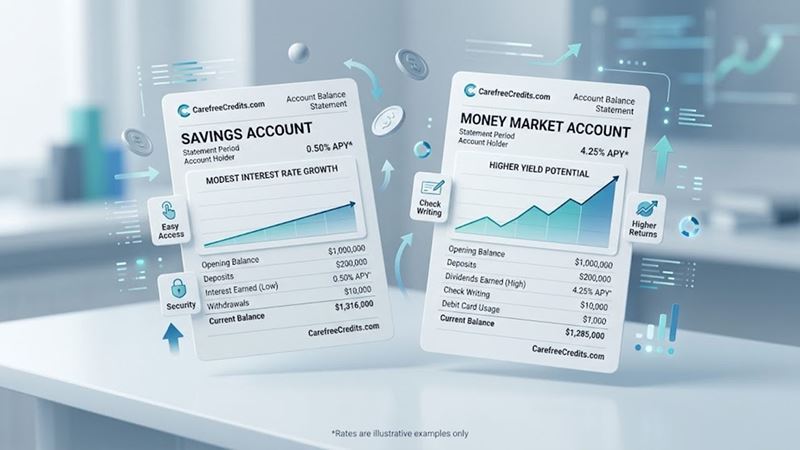
Sometimes. Money market accounts can pay similar rates and add check-writing, but often require higher balances. Compare in money market account vs. savings account.