How to Improve Your Credit Score: 10 Steps That Work
What actually moves a FICO score, which steps work within one or two billing cycles, which take months and what a better score is worth in real dollars on a car loan or mortgage.

Listen to this article
Key takeaways
- Payment history (about 35%) and amounts owed (about 30%) make up roughly two thirds of a FICO score, so on-time payments and low card balances matter most.
- The fastest legitimate lever is credit utilization: pay card balances down before the statement closes and the score can rise as soon as the lower balance is reported.
- Errors are common enough to check. You can pull all three credit reports free every week at AnnualCreditReport.com.
- Accurate negative items cannot be removed early, but their effect fades over time, and new on-time history steadily outweighs them.
Your credit score decides whether you get approved and, just as important, what you pay. The average FICO score in the U.S. is 714, according to FICO's fall 2026 credit insights. If yours is below that, or you are about to apply for a mortgage or car loan, the steps below are the ones that actually move the number. None of them cost money, and none involve the "credit repair" shortcuts that the Federal Trade Commission warns about.
What goes into your score
| FICO factor | Approx. weight | What helps |
|---|---|---|
| Payment history | 35% | Every payment on time, no collections |
| Amounts owed | 30% | Low card balances relative to limits |
| Length of credit history | 15% | Older accounts kept open |
| New credit | 10% | Few recent applications |
| Credit mix | 10% | Experience with both cards and loans |
The weights are FICO's figures for the general population; for people with short histories they shift. VantageScore uses different categories but rewards the same behavior. Ranges and what lenders consider good are covered in what is a good credit score.
10 steps to improve your credit score
- Check all three credit reports. Get them free at AnnualCreditReport.com, the only site authorized by federal law. Look for accounts you do not recognize, wrong late payments, wrong balances and duplicate collections. How to fix mistakes is explained in how to dispute credit report errors.
- Never miss another payment. Set up autopay for at least the minimum on every account. Lenders generally report a payment as late only once it is 30 days past due, so a payment a few days late usually costs a fee, not points, if you catch it quickly.
- Bring past-due accounts current. An account that is still delinquent keeps adding new late marks every month. Catching up stops the damage from growing.
- Pay card balances down before the statement date. Issuers usually report the statement balance. Lower reported balances mean lower utilization, which most scores recalculate from scratch every month.
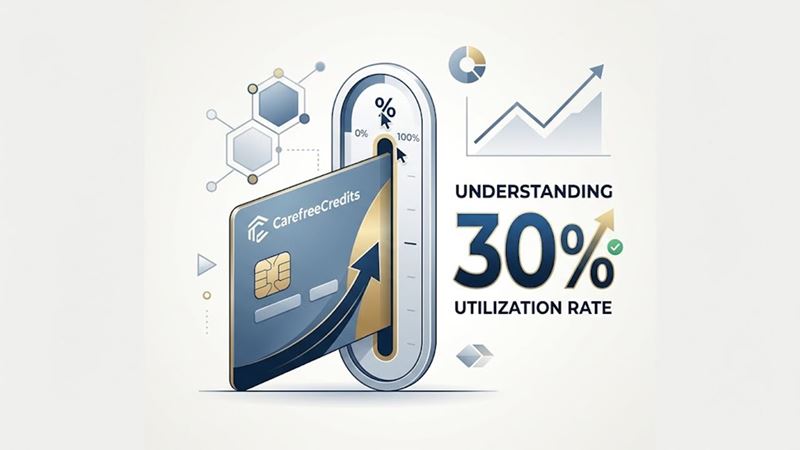
- Get each card below 30%, ideally below 10%. Both the overall ratio and the ratio on single cards count; see credit card utilization.
- Ask for a higher credit limit. On a card in good standing, a higher limit lowers utilization if you do not spend more. Ask whether the request uses a hard inquiry.
- Keep old, no-fee cards open. Closing them removes their limits and, over time, shortens your history. Use them for a small purchase now and then so the issuer does not close them.
- Apply for new credit only when you need it. One hard inquiry usually costs fewer than five FICO points and counts for 12 months, but several in a short time add up. Rate shopping for a mortgage, car or student loan is treated differently; see hard vs. soft credit inquiry.
- Add positive data if your file is thin. Experian Boost adds on-time utility, phone, internet and streaming payments to your Experian file for free and can raise FICO scores based on Experian data. Rent reported by a landlord or rent-reporting service counts in newer models such as FICO Score 9 and 10 and VantageScore 3.0 and 4.0, while the widely used FICO Score 8 does not consider rent payments.
- Deal with collections the right way. Paying a collection does not remove it, but newer scores such as FICO Score 9 and 10 and VantageScore 4.0 ignore paid collections. Details are in how to remove collections from your credit report.
How long improvements take
| Action | When it can show up |
|---|---|
| Lower card balances | Next time the issuer reports, usually within one billing cycle |
| Corrected error | After the dispute is resolved, generally within 30 days of the bureau receiving it |
| Higher credit limit | At the next report |
| Hard inquiry | Stops counting in FICO after 12 months, leaves the report after 2 years |
| Recent late payment | Impact fades over months and years; removed 7 years from the original delinquency |
| New account from scratch | A first FICO score needs an account at least 6 months old |
If your problems are bigger, such as several charge-offs, a bankruptcy or collections, the step-by-step plan in how to rebuild credit fits better. If you have no credit at all, start with how to build credit from scratch.
What a better score is worth
Experian's State of Automotive Finance report for the second quarter of 2026 shows how strongly rates depend on the credit tier. On a $30,000 new-car loan over 60 months:
| Credit tier (VantageScore) | Avg. APR | Payment | Total interest |
|---|---|---|---|
| Super prime (781–850) | 4.41% | $558 | $3,484 |
| Prime (661–780) | 6.15% | $582 | $4,925 |
| Near prime (601–660) | 9.71% | $633 | $7,988 |
| Subprime (501–600) | 13.52% | $691 | $11,436 |
Moving from near prime to prime saves about $3,000 on this one loan. For a full rate table see auto loan rates by credit score.
What does not help
- Checking your own score. It is a soft inquiry and never lowers your score, so check as often as you like.
- Carrying a balance. You do not need to pay interest to build credit. Paying in full every month still shows activity.
- Paid "credit repair" promises. No company can legally remove accurate, current information. Under the Credit Repair Organizations Act, they may not charge you before the work is done. Everything they can legally do, you can do yourself for free.
- Income. Salary and savings balances are not part of credit reports or scores, though lenders look at them separately.
Frequently asked questions
How can I raise my credit score by 100 points?
A jump that size is realistic mainly if high card utilization or a reporting error is holding you down. Paying cards from 80% utilization to under 10%, or removing a wrong collection, can move a score a lot within a month or two. Recovering from late payments takes longer.
How fast can I improve my credit score?
Lower balances and corrected errors can show up within 30 to 45 days. Rebuilding after missed payments usually takes 12 to 24 months of clean history.
Does paying off a loan early raise my score?
Not necessarily. Closing an installment loan can even cause a small dip because you have one fewer active account. It still saves interest, which is often worth more than a few points.
Will closing a credit card hurt my score?
It can, because you lose that card's limit, which raises utilization. Closing a card with an annual fee you no longer want can still make sense.
Do debit cards or bank accounts build credit?
No. Checking and savings accounts are not reported to the credit bureaus. Overdrafts sent to collections can be, though.