Fixed-Term Deposits
CD Ladder Strategy: How to Build a CD Ladder
A CD ladder splits your savings across CDs that mature at different times, so part of the money is always close to being available while the rest earns longer-term rates.
A CD ladder splits your savings across CDs that mature at different times, so part of the money is always close to being available while the rest earns longer-term rates.
At 4% APY, $10,000 earns about $400 in a year and $33 a month; at the 0.37% national average, about $37 a year. See the math for other balances, CDs and taxes.
Calculate what a CD earns by maturity, convert an interest rate into APY, estimate the early withdrawal penalty and compare competitive CD rates with the national average.
See how savings and investments grow with compound interest, how much comes from your own contributions and how much from interest on interest, with worked examples and the formula.
Yes: savings interest is taxed as ordinary income in the year it is credited, whether or not you get a 1099-INT. Here is how much tax to expect, what Treasury interest saves on state taxes and how kids' interest is taxed.
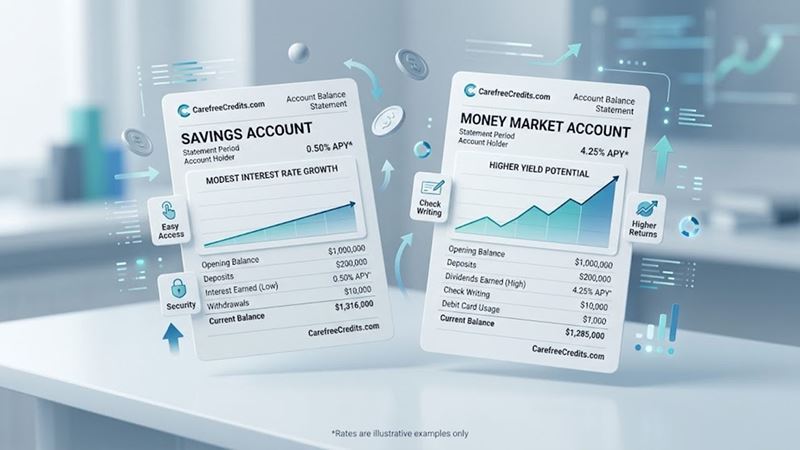
Money market accounts are insured bank accounts with check-writing; money market funds are uninsured investments that track Treasury yields. Here is how they compare with savings accounts on rate, access and safety.
Most guidance says three to six months of essential expenses. The right number depends on income stability, household size and insurance. Here is how to calculate yours, where to keep it and how to build it.
The national average savings rate is 0.37%, but many online banks pay 4% or more after the Fed's September 2026 hike. Learn how high-yield savings accounts work, how safe they are and how to pick a good one.
A mortgage recast keeps your rate and term but recalculates the payment after a lump-sum principal payment, usually for a fee of a few hundred dollars. Here is when it beats refinancing and when it does not.
A refinance pays off when the monthly savings recover the closing costs before you move or refinance again. Learn the break-even formula, see a worked example and avoid the term-reset trap.
A home equity loan gives you a lump sum at a fixed rate; a HELOC is a variable-rate credit line you draw as needed. With the prime rate at 7.00%, here is how costs compare and which one suits which purpose.
Interest on a personal loan used for personal expenses is not deductible. It can be if the money pays for business costs, investments or qualified education, and new-car buyers may deduct some auto loan interest through 2028.