How Much House Can I Afford? Home Affordability Calculator
How lenders calculate what you can borrow, a step-by-step example at today's mortgage rates, the costs beyond principal and interest, and how much house is comfortable rather than just approvable.
Listen to this article
Key takeaways
- A common lender guideline: housing costs up to 28% of gross monthly income and all debts up to 36%. Automated underwriting can allow higher ratios.
- Your "housing cost" is the full payment: principal, interest, property taxes, homeowners insurance, plus mortgage insurance and HOA dues if any.
- With a $90,000 income, a $400 car payment and the 7.28% average 30-year rate (October 1, 2026), the 28/36 rule points to a loan of about $241,000.
- Every percentage point in rate changes your buying power by roughly 10%.
The question has two answers: what a lender will approve and what you can live with. Lenders work from ratios that predict default risk. Your budget should also account for savings goals, childcare, commuting and the repairs no lender asks about. This guide walks through the lender math first, then the reality check.
Please note
Example figures use Freddie Mac's 30-year average of 7.28% from October 1, 2026, and assumed taxes and insurance. Your rate, local taxes and insurance costs will differ. This is general information, not a loan approval.
Enter your income, debts and down payment in the home affordability calculator to see three price ranges at once: a conservative budget, a comfortable one based on the classic 28/36 rule, and the maximum a lender might approve.
Home affordability calculator
Budgets use gross income: conservative = housing up to 25% and all debts up to 33%; comfortable = 28% and 36%; lender maximum = all debts up to 45%. Lenders decide case by case.
The 28/36 rule
- Front-end ratio: total housing payment divided by gross monthly income. Guideline: 28% or less.
- Back-end ratio: housing payment plus all other monthly debt payments (car loans, student loans, card minimums, personal loans) divided by gross monthly income. Guideline: 36% or less.
These are rules of thumb, not hard limits. Fannie Mae's automated underwriting can approve total debt ratios up to 50% for strong applicants, FHA's standard benchmarks are 31% and 43%, and VA loans add a residual-income test. Being approved at 45% does not mean the payment is comfortable.
Lender maximum, comfortable and conservative budgets
The calculator shows three budgets because "affordable" means different things to a lender and to a household:
| Budget | Housing payment up to | All debts up to | Who it suits |
|---|---|---|---|
| Conservative | 25% of gross income | 33% | Buyers who want room for retirement saving, childcare, a single income or rising taxes and insurance |
| Comfortable | 28% | 36% | The classic guideline; manageable for most households with modest other goals |
| Lender maximum | No separate limit | 45% | Fannie Mae's ceiling for many manually underwritten loans with strong credit and reserves; automated approvals can reach 50% |
With the calculator's starting values, $100,000 of income, $500 of monthly debts, $40,000 down and 7.28% for 30 years, the conservative budget is about $272,000, the comfortable one about $303,000 and the lender maximum about $415,000. At the maximum, the housing payment would take 39% of gross income, roughly half of take-home pay for many households. Lenders approve the ratio, not your lifestyle; how a lender calculates the ratio is explained in debt-to-income ratio.
Once you have a price in mind, the mortgage calculator shows the full monthly payment and the amortization schedule for that home.
Step by step: a worked example
Assume a single buyer with a gross salary of $90,000, a $400 car payment and no other debts.
| Step | Amount |
|---|---|
| Gross monthly income | $7,500 |
| 28% front-end limit | $2,100 |
| 36% back-end limit minus $400 car payment | $2,300 |
| Housing budget (the lower of the two) | $2,100 |
| Minus property taxes and insurance (assumed) | −$450 |
| Available for principal and interest | $1,650 |
| Loan amount at 7.28%, 30 years | ≈ $241,150 |
With a 20% down payment, that loan supports a price of about $301,000. With 10% down, private mortgage insurance enters the budget. Assuming $110 a month of PMI, the loan shrinks to about $225,000 and the affordable price to about $250,000. A smaller down payment reduces your buying power twice: less cash in and a higher monthly cost.
How the interest rate changes your buying power
| 30-year rate | Loan for $1,650 of principal and interest |
|---|---|
| 6.28% | ≈ $267,100 |
| 7.28% | ≈ $241,150 |
| 8.28% | ≈ $219,000 |
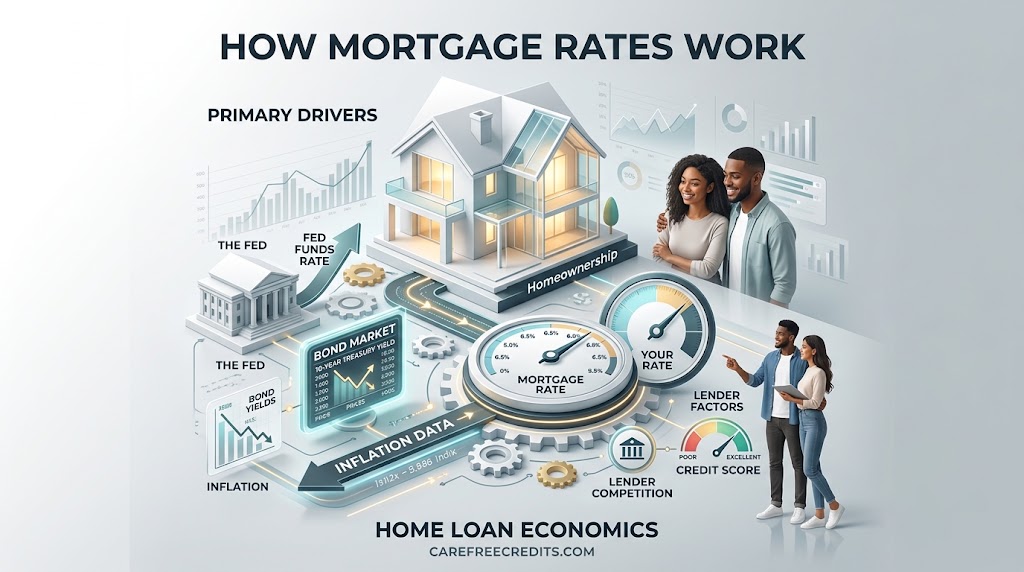
One percentage point is worth about $22,000 to $26,000 of loan here, roughly 10%. That is why how mortgage rates work matters as much as the price you negotiate.
The costs beyond principal and interest
- Property taxes vary widely by state and county; check the actual bill for the homes you consider.
- Homeowners insurance has risen sharply in many areas, especially where storms and wildfires are common.
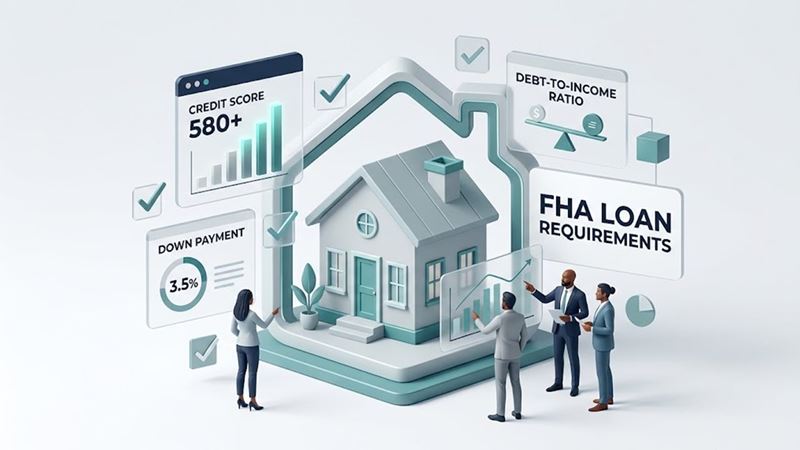
- Mortgage insurance: PMI on conventional loans with less than 20% down, or FHA mortgage insurance. Details in FHA loan requirements.
- HOA or condo fees, which lenders include in the housing ratio.
- Maintenance and repairs, not counted by lenders. Many owners budget 1% or more of the home's value per year.
- Closing costs at purchase, commonly a few percent of the price, plus moving and furnishing.
Taxes and insurance usually flow through an escrow account and can rise every year; see escrow shortages explained.
From approvable to comfortable
- Start from take-home pay. Ratios use gross income, but you pay from net income.
- Keep your emergency fund intact after the down payment and closing costs; see how much to keep in an emergency fund.
- Leave room for retirement saving. A house that stops your 401(k) contributions costs more than its price.
- Stress-test the payment for higher taxes, insurance and an income dip.
How to afford more without stretching
- Pay down other debts to improve the back-end ratio.
- Improve your credit score for a lower rate.
- Compare loan programs, including low-down-payment options in our first-time home buyer guide.
- Get quotes from several lenders on the same day; rate differences between lenders can be substantial.
Frequently asked questions
How much house can I afford on $100,000 a year?
Under the 28% guideline, about $2,333 a month for the full housing payment. After taxes and insurance, that supports a loan in the range of $250,000 to $290,000 at 7.28%, depending on local costs and other debts.
Does the 28/36 rule use gross or net income?
Gross income before taxes and deductions. That is why many households aim lower than the rule allows.
Do lenders count student loans in the back-end ratio?
Yes. Lenders include the monthly payment, and for loans in deferment they use a calculated payment based on program rules.
Is it better to put 20% down?
20% avoids PMI on conventional loans and lowers the payment, but it is not required. Many buyers put down 3% to 10% and cancel PMI later when their equity reaches 20%.
How much should I have saved before buying?
The down payment, closing costs and a cash reserve. Lenders may require reserves of a few months of payments, and an emergency fund should remain after closing.